
“Too Young for Aged Care”: Rethinking NDIS Support for Young People with Disabilities

Imagine that you were in your 30s and living in an aged care facility surrounded by people, perhaps three times your age, struggling with social connection, independence, and freedom that most of your friends and peer group enjoy. For over 1,000 young Australians with disabilities, this isn’t a hypothetical. It’s their reality!
Despite a federal target to eliminate younger people from aged care by 2025, the goal remains an uphill struggle. The current system, including the NDIS, hasn’t yet delivered the structural changes needed to resolve this human rights issue. But what if it could, with bold, practical reform and stronger cross-sector collaboration?
Why are young people still in Aged Care?
There are many reasons why this issue persists. There’s a shortage of specialist disability accommodation (SDA) tailored to younger people’s needs and preferences, highlighting a clear gap in housing options. Long wait times for plan approvals, reviews, or home modifications prevent timely transitions out of aged care, raising issues with NDIS funding delays. Also, the complex interface between the NDIS, health, and housing systems leads to missed opportunities for early intervention and planning due to poor care coordination.
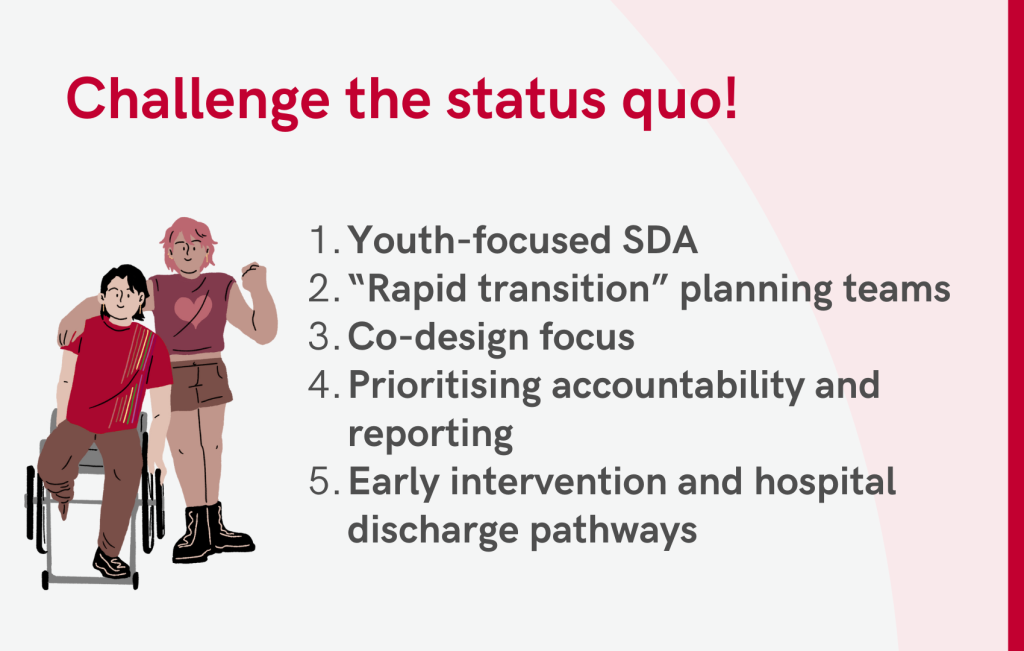
What should be done to challenge the status quo?
Investment in Youth-Focused SDA.
The current market for SDA in some cases prioritises availability over appropriateness. Younger participants need homes that support, not only physical access, but also community participation and age-appropriate living. The NDIS should provide targeted funding or incentives to SDA providers building youth-oriented, innovative housing and streamline approvals for SDA eligibility, particularly for those at risk of being placed in residential aged care.
“Rapid Transition” Planning Teams
These teams would be dedicated to identifying young people at risk of admission to aged care and facilitating a 30-90 day transition plan, which would involve quicker case management, fast-tracked funding decisions, and easier coordination with housing, healthcare, and support service providers.
Co-design focus
Involving young people with lived experience. By involving young people who have experienced institutional living, the NDIS and housing agencies can co-create pathways that are respectful, empowering, and actually work!
Prioritising accountability and reporting
This would drive better policy, and public scrutiny can keep progress moving.
Enhance early intervention and hospital discharge pathways
The stats show that many young people enter aged care after a sudden injury or health crisis. If we improve pre-discharge planning in hospitals and connect directly with NDIS coordinators, we could prevent inappropriate placements before they happen.
This is a rights issue for younger Australians
Young people with disabilities have the right to live with dignity, autonomy, and choice! In my opinion, aged care facilities are not designed for them, nor should they be considered an acceptable default option. If we are serious about inclusion and equity, we need to stop managing this issue with patchwork responses. The NDIS must be an enabler for freedom, not institutionalisation.
What are your thoughts?
Have you worked with young people navigating this challenge? What other solutions do you think should be on the table?
Let’s continue the conversation and push for a system that truly reflects the values we claim to uphold.
READ MORE